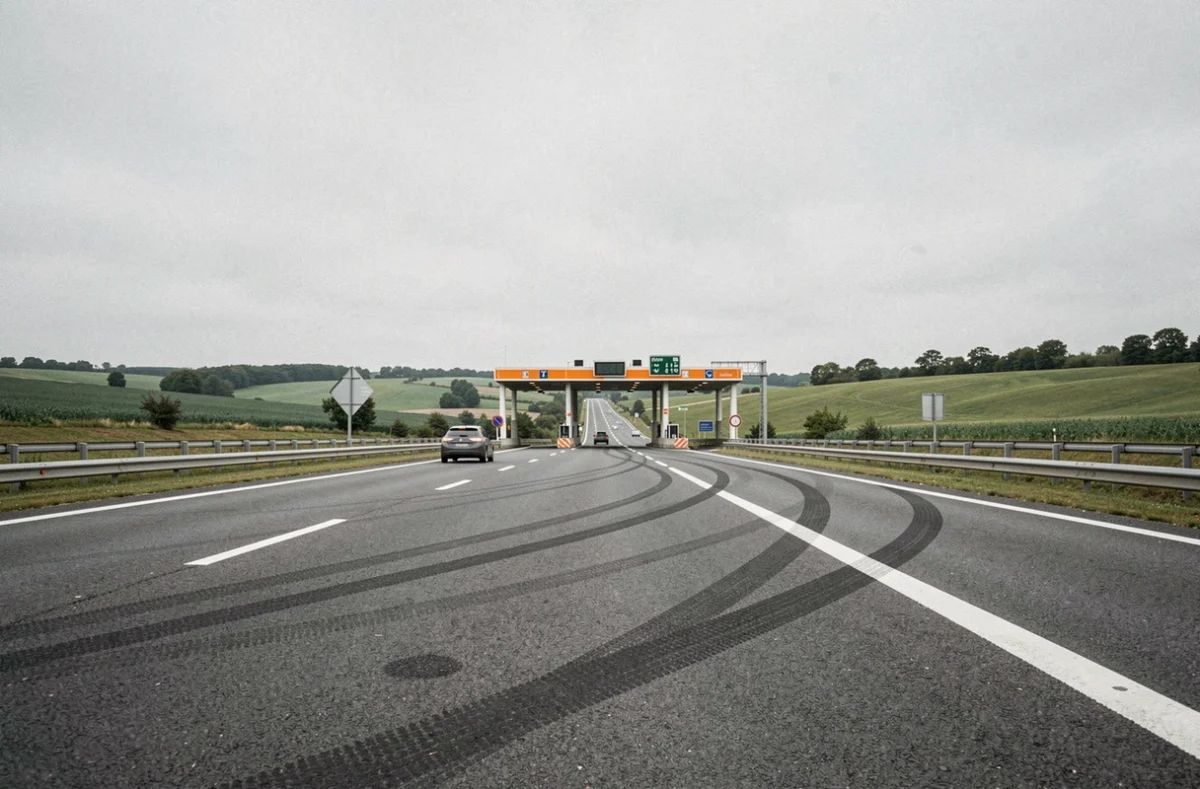
Comparing toll roads and free national roads in France involves measuring three variables: travel time, total cost (toll, fuel, electric charging), and driver fatigue. The result depends less on a principled choice than on the vehicle used, the distance, and the specific route.
Toll costs versus fuel overconsumption: the real calculation
The most common reasoning is to subtract the toll price and conclude that the national road saves money. This arithmetic overlooks one aspect: the additional consumption related to extra kilometers, stops, accelerations, and variable speed limits on national roads.
On a route like Paris-Bordeaux, the difference in distance between the highway and the national road often exceeds several dozen kilometers. Each additional kilometer consumes fuel, and the acceleration-braking phases through towns increase the average consumption well beyond what is observed at a stabilized speed on the highway.
For a recent thermal vehicle, the actual savings on national roads significantly decrease once the additional fuel costs are factored in. On some short routes, the net difference can drop to just a few euros. You can learn more on actumecanique fr for a detailed comparison by route.
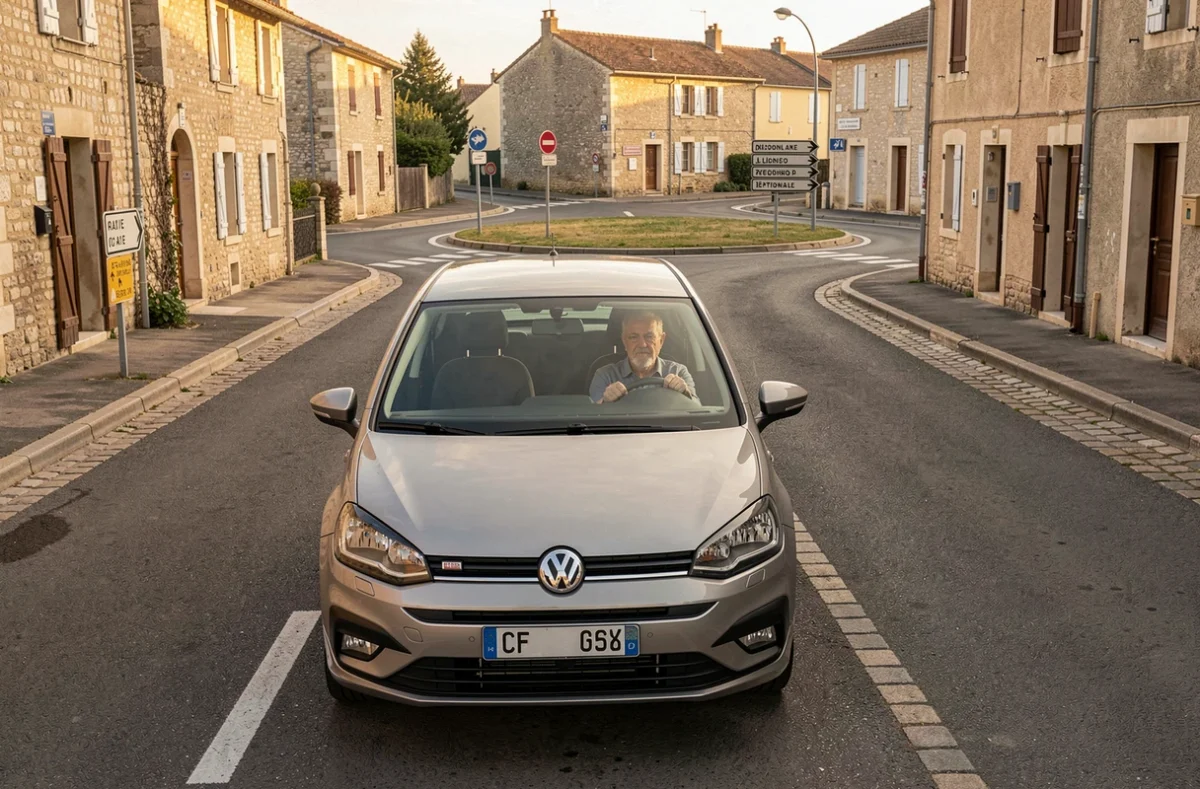
Free highways in France: often unknown sections
Not all highways are toll roads. Several sections of free highways exist on the French network, particularly in the west, north, and around certain urban areas. These segments offer the same characteristics as a toll highway (two separate lanes, high speed, no intersections) without toll fees.
The advantage of these free routes is twofold: they retain the time savings typical of highways while eliminating the toll cost. Combining free sections with well-chosen portions of national roads often represents the best compromise between cost and travel time.
Hybrid routes: the third option
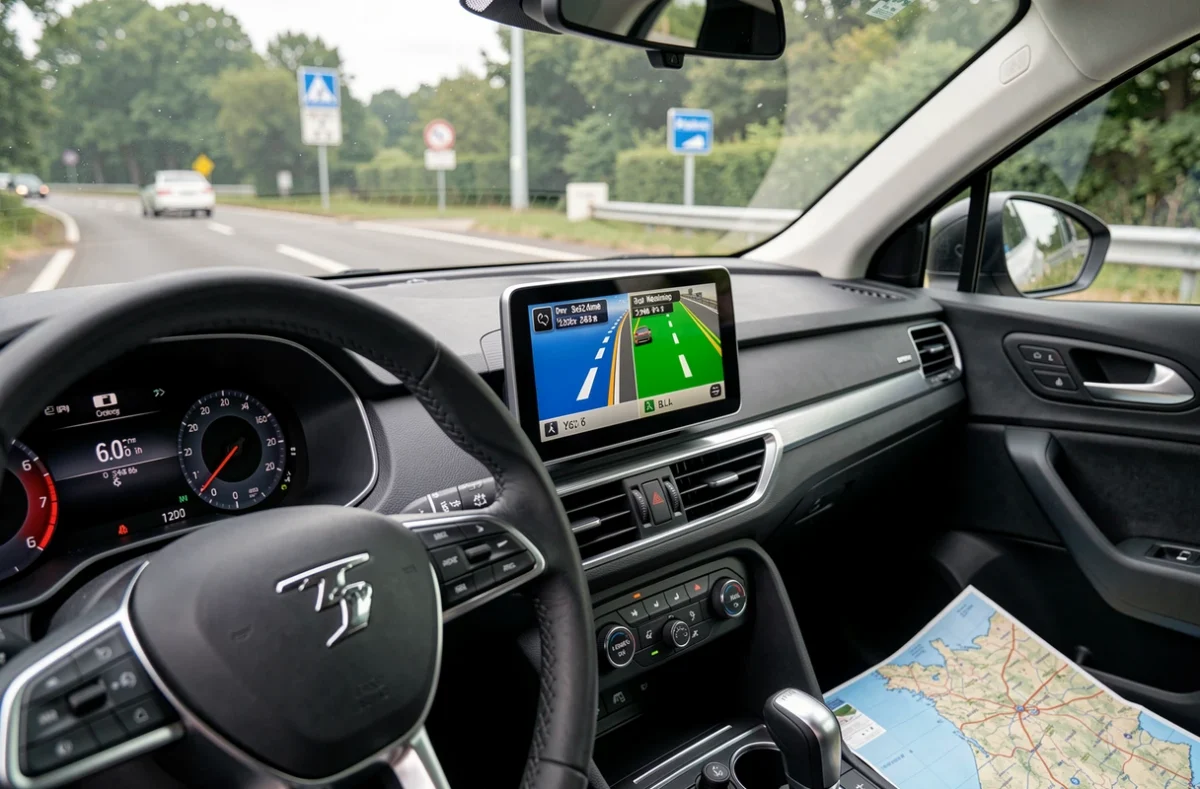
Recent navigation tools allow for route settings that exclude tolls. The result is not always a complete national road: the algorithm may use free expressways, non-toll highways, and short sections of fast departmental roads.
- Expressway-type routes with 2×2 lanes without tolls: common in Brittany, the North, and around Nancy
- Free urban bypasses: often classified as highways but without toll barriers
- Recently renovated sections of national roads with overtaking lanes, limited to 90 or 110 km/h
This type of hybrid route adds a few minutes to the journey compared to a fully toll highway, but eliminates almost all toll costs.
Electric vehicle: a parameter that changes the calculation
For electric car drivers, the choice between highway or national road is no longer just about tolls. The cost of fast charging at a highway rest area can be significantly higher than that observed at charging stations installed along national routes or in municipal public networks.
This price difference, combined with higher electricity consumption at 130 km/h compared to 80 or 90 km/h, can reverse the economic equation. On a long electric journey, the national road can become cheaper than the highway, including charging.
The availability of charging stations remains a limiting factor. The network is developing rapidly, but price transparency varies from one operator to another, making prior calculations more complex than a simple toll rate assessment.
Time, fatigue, and safety: the comparative table
Beyond cost, time and driving comfort weigh heavily in the decision. Here’s a summary of typical differences on a journey of several hundred kilometers in France.
| Criterion | Toll Highway | National / Free Expressway |
|---|---|---|
| Effective average speed | High (few stops, continuous flow) | Moderate (crossings, traffic lights, slowdowns) |
| Travel duration | Shorter | Longer (often +30% to +50%) |
| Toll cost | Variable depending on distance and concession | None |
| Fuel / energy consumption | Stable at constant speed, but high at 130 km/h | Irregular, overconsumption in urban phases |
| Driver fatigue | Lower (monotony, but fewer demands) | Higher (sustained attention, frequent maneuvers) |
| Access to services (charging, rest) | Regular, but higher rates | Irregular, often lower rates |
Concession taxation: a factor to watch
The tax on the operation of long-distance transport infrastructures, created by the 2024 finance law, targets highway concessionaires exceeding certain revenue and profitability thresholds. Its potential escalation fuels a standoff between the state and highway companies.
However, toll rates remain regulated by concession contracts and state approval. A tax increase on concessionaires does not automatically translate into a higher toll price. Including this tax as an immediate additional cost in the calculation would be premature.
What choice based on distance and trip profile
On a short trip (less than two hours), the national road or free expressway almost always prevails: the time savings offered by the highway remain marginal, and the toll weighs proportionally heavier.
On a long trip (Paris-Spain, Paris-Nancy and beyond), the toll highway regains the advantage through time saved and reduced fatigue. The cost of the toll dilutes in an overall budget where accommodation and meals weigh more.
- Short or suburban trip: favor free expressways and renovated national roads
- Medium trip with available free sections: hybrid route, the best cost-time ratio
- Long or night trip: toll highway for safety and flow regularity
- Electric vehicle: compare charging costs on each type of route before deciding
The factor that most often settles the debate is neither the toll price nor the distance, but the time the driver is willing to spend behind the wheel. Each additional hour on a national road has an invisible cost in fatigue and alertness, which price comparison tools do not display.