
When you open the hood to change a spark plug or diagnose an ignition misfire, the first practical question is often the same: where is cylinder number 1 located? The answer depends on the type of engine, its orientation under the hood, and the manufacturer’s conventions. Correctly identifying this cylinder is crucial for the timing of the distribution, the connection of the spark plugs, and the interpretation of OBD fault codes.
Why cylinder numbering varies from one engine to another
Have you ever noticed that a forum gives a different answer depending on the vehicle brand? That’s normal. There is no single international standard that requires all manufacturers to place cylinder 1 in the same location.
On a longitudinally mounted inline engine, cylinder 1 is generally located on the distribution side (belt or chain). On a transverse engine, this logic still applies, but the distribution side can be on the right or left depending on the orientation chosen by the manufacturer.
To properly understand the location of cylinder number 1 on an engine, you need to reason based on the architecture rather than your position facing the vehicle. This is the starting point for any reliable mechanical operation.
V engines add a complication: two rows of cylinders coexist. Depending on the brands, cylinder 1 can be located on the left or right bank, always on the side of the distribution drive. Boxer engines (flat) follow a similar logic, with cylinder 1 generally on the right bank from the driver’s perspective.
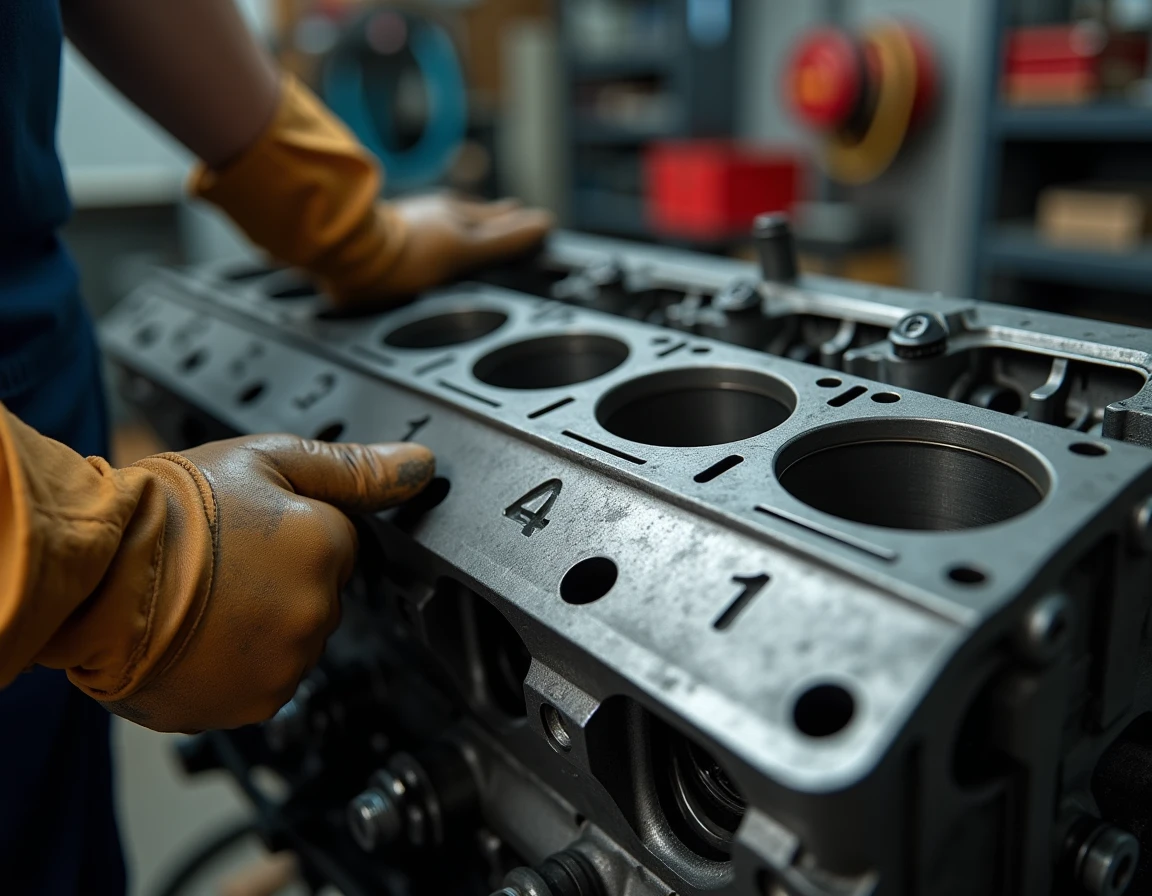
Identifying cylinder 1 on an inline engine: a practical method
The inline engine (3 or 4 cylinders) is the most common. It is also the easiest to decode.
Locate the distribution side
Look for the timing belt or chain. It is located under a plastic or metal cover, at one end of the engine block. The cylinder closest to this cover is number 1.
On recent compact 3-cylinder engines (type 1.0 or 1.2 L), manufacturers have standardized this convention to simplify workshop interventions. Cylinder 1 is systematically on the distribution side, and this information is reflected in the fault codes of the engine control unit.
Check by the spark plug or injector
Once the distribution side is identified, count the spark plugs (gasoline) or injectors (diesel) starting from that side. The first spark plug, closest to the distribution, feeds cylinder 1. The numbering then follows in ascending order towards the flywheel.
- Cylinder 1: on the timing belt or chain side
- Subsequent cylinders: numbered as you move away from the distribution, towards the flywheel
- The flywheel is located on the opposite side, near the gearbox
Cylinder 1 on V engines and boxer engines: common pitfalls
V engines complicate matters because the cylinders are distributed across two inclined rows. The row that contains cylinder 1 is referred to as “bank 1” in manufacturer terminology.
Bank 1 is the one that contains cylinder number 1, and it is also the row referenced by lambda probes or camshaft sensors in the fault codes. Confusing bank 1 and bank 2 can lead to replacing the wrong probe or injector.
On most V6 and V8 engines, cylinder 1 is the first cylinder on the distribution side row. However, some German brands place cylinder 1 on the row closest to the radiator. This is why it is important to check the workshop manual before any intervention.
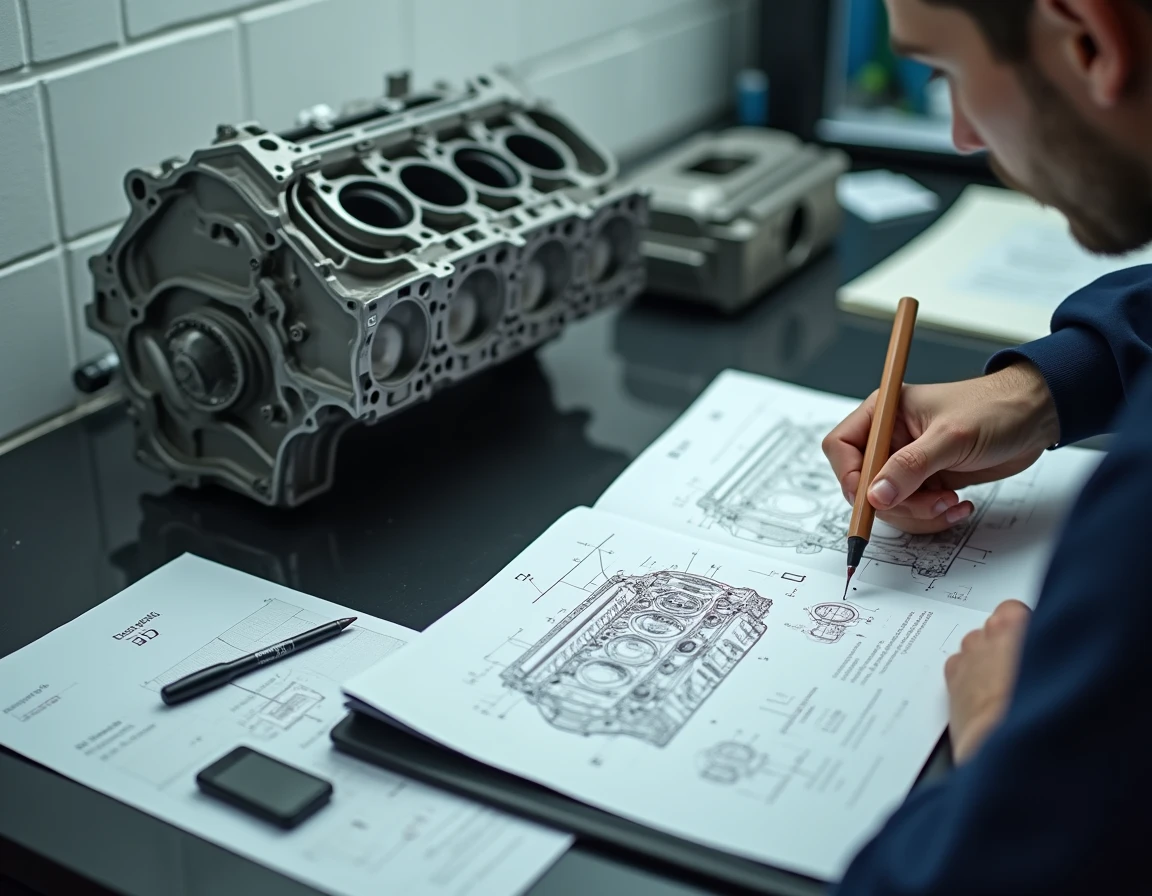
Boxer engines, used notably on some flat models, follow a similar logic to V engines. Cylinder 1 is usually located on the right bank (viewed from the driver’s seat), on the distribution side.
OBD diagnostics and cylinder numbering: why it’s related
Modern vehicles detect misfires cylinder by cylinder thanks to the engine control unit. When the diagnostic tool displays a code like P0301, the last digit indicates the cylinder in question: here, cylinder 1.
The fault code P030X identifies a misfire on cylinder X, making the physical location of cylinder 1 essential for intervening in the correct place. Manufacturers define this correspondence strictly in their internal technical documents, precisely so that the mechanic in the workshop does not confuse the cylinder.
On recent 3-cylinder engines, this rigor is even more pronounced. Engine management integrates the numbering directly into the network diagnostic procedures, and an incorrectly identified cylinder skews the entire repair chain.
Three reflexes to never confuse cylinders
Before touching a spark plug, an injector, or a coil wire, adopt these systematic checks:
- Consult the workshop manual or technical review of your vehicle: a diagram indicates the exact numbering of the cylinders for your engine type
- Physically locate the distribution side (belt or chain): cylinder 1 is almost always on this side, regardless of the architecture
- Cross-check with the OBD tool if available: induce a controlled misfire (disconnecting a coil while idling) and check that the fault code displayed corresponds to the cylinder you think is correct
Manufacturer documentation remains the most reliable source to settle any doubts. Workshop habits like “belt side” or “flywheel side” work in most cases, but some recent architectures or certain brands are exceptions. Taking thirty seconds to check in the technical review avoids an error that could cost a newly installed part.